STORY v2
The Original Hoffman’s Melody Shop
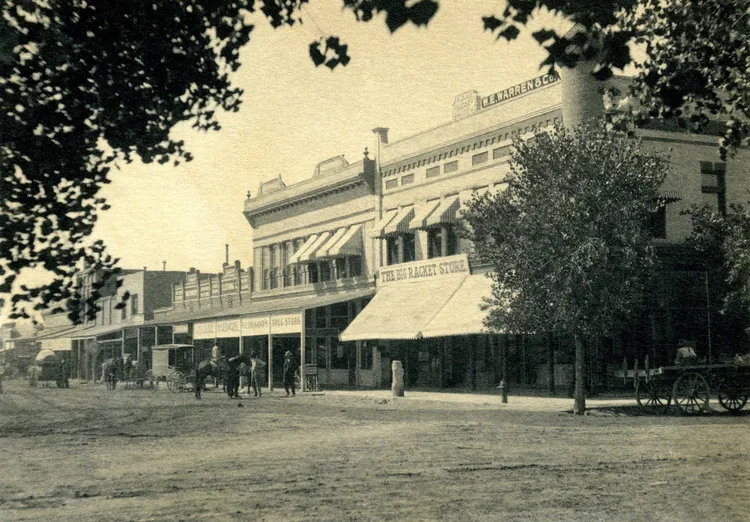
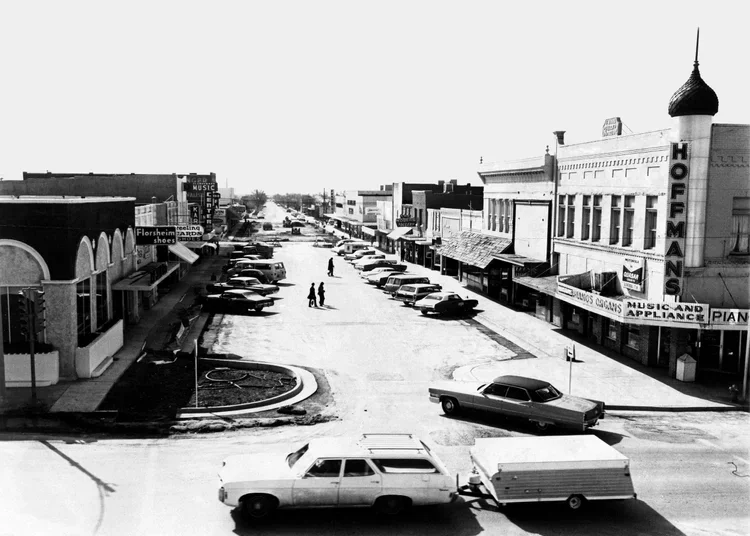
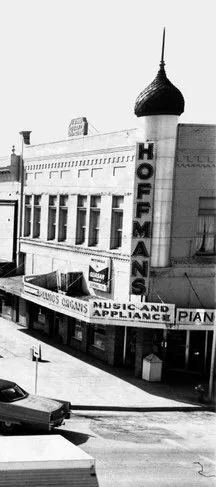
My grandfather was both an entrepreneur and a music lover. In the 1940s, he owned a sporting goods store and later a radio repair shop. But in 1950, he opened what would become his dream business in Alamogordo, New Mexico: Hoffman’s Melody Shop.
The store sold pianos, organs, guitars, and sheet music, but it was best known in the community as the place where students in grades 5–12 could find band and orchestra instruments.
In the late 1960s and early 1970s, the Alamogordo High School marching band earned numerous regional and national trophies for its precision halftime performances, set to an eclectic mix of music.
Although my grandfather loved music, growing up in small towns meant he never had the opportunity to play an instrument or sing in a group. He wanted something different for his son, my dad, so when Dad was about six, he brought home a small Magnus chord organ. As Dad's playing improved, the organs got bigger and better, eventually culminating in a Thomas theater organ—the same model featured on the popular Lawrence Welk television show throughout the 1950s and 1960s.
My mom and dad met in 1965, both playing oboe in their junior high school band. They went on to share in the Alamogordo High School band's successes and have been together ever since.
My grandfather passed away in 1969, and my grandmother continued running Hoffman’s Melody Shop for another three years. In 1972, she sold the business to a local appliance store, bringing music at the corner of 10th and New York Avenue to an end.
The Invincible Hoffman’s Melody Shop Sign
Fast-forward to 2000. The buildings just east of the former music store had been torn down to make way for Founder’s Park, a tribute to influential figures in Alamogordo's early history.
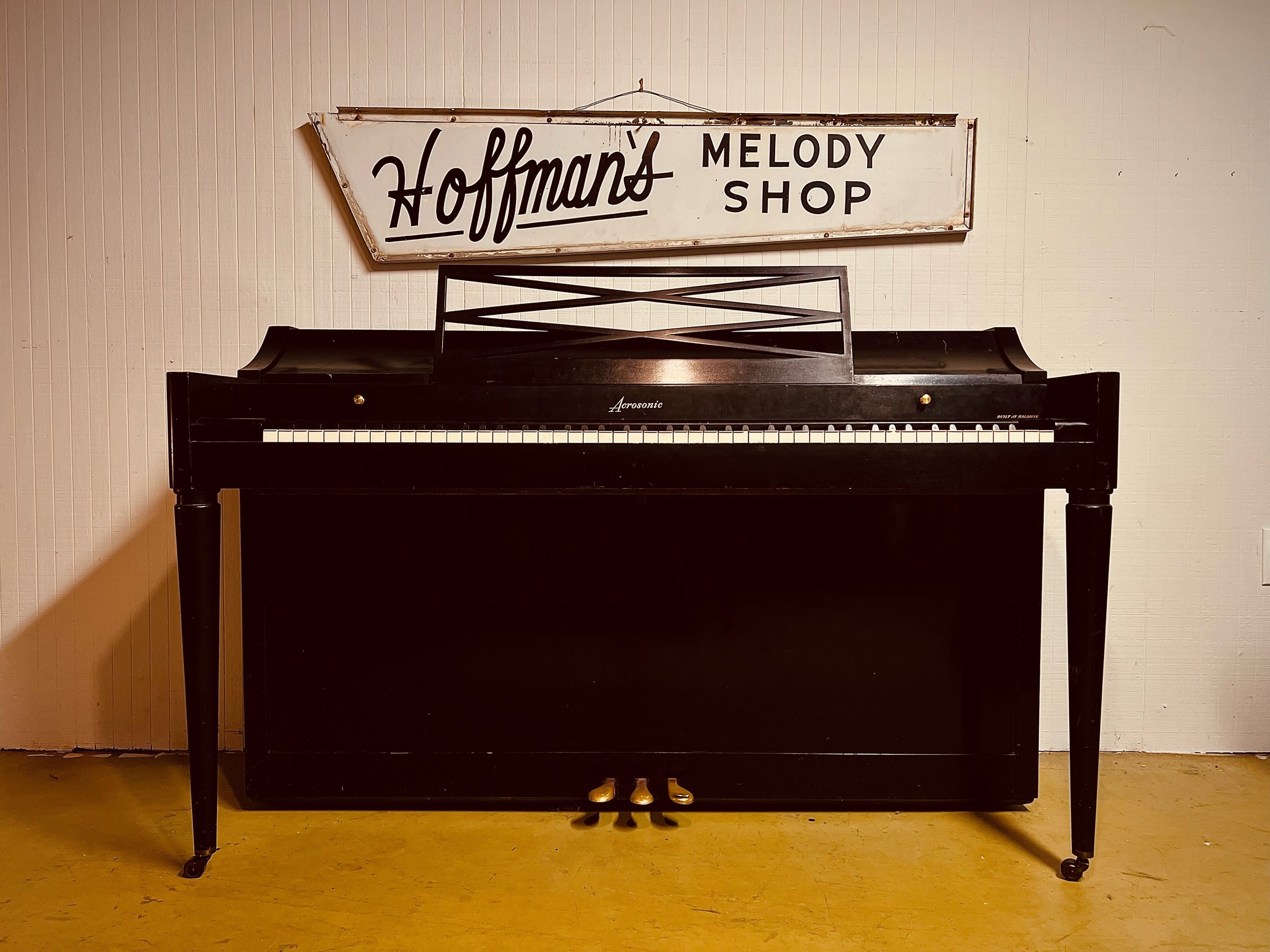
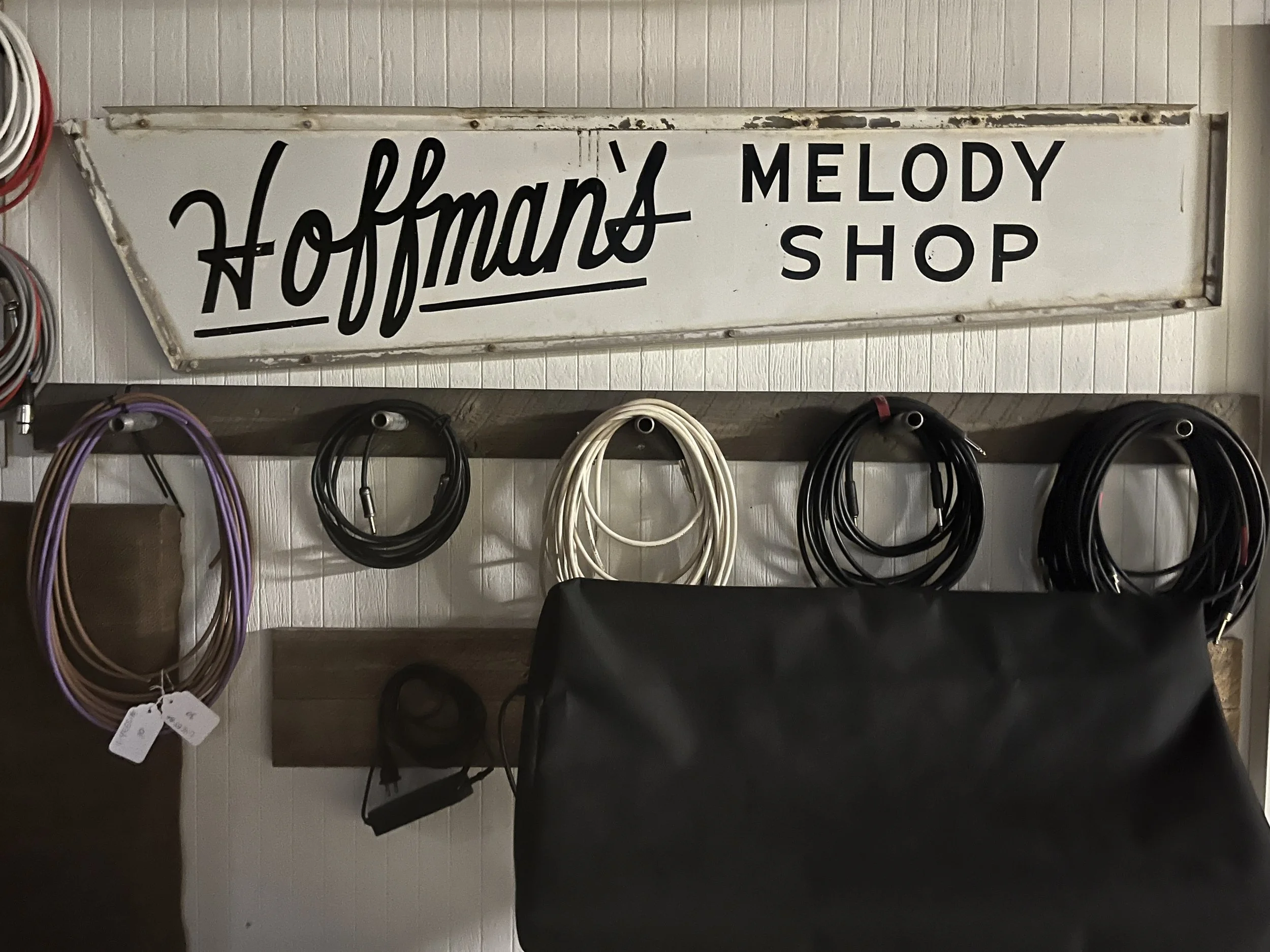
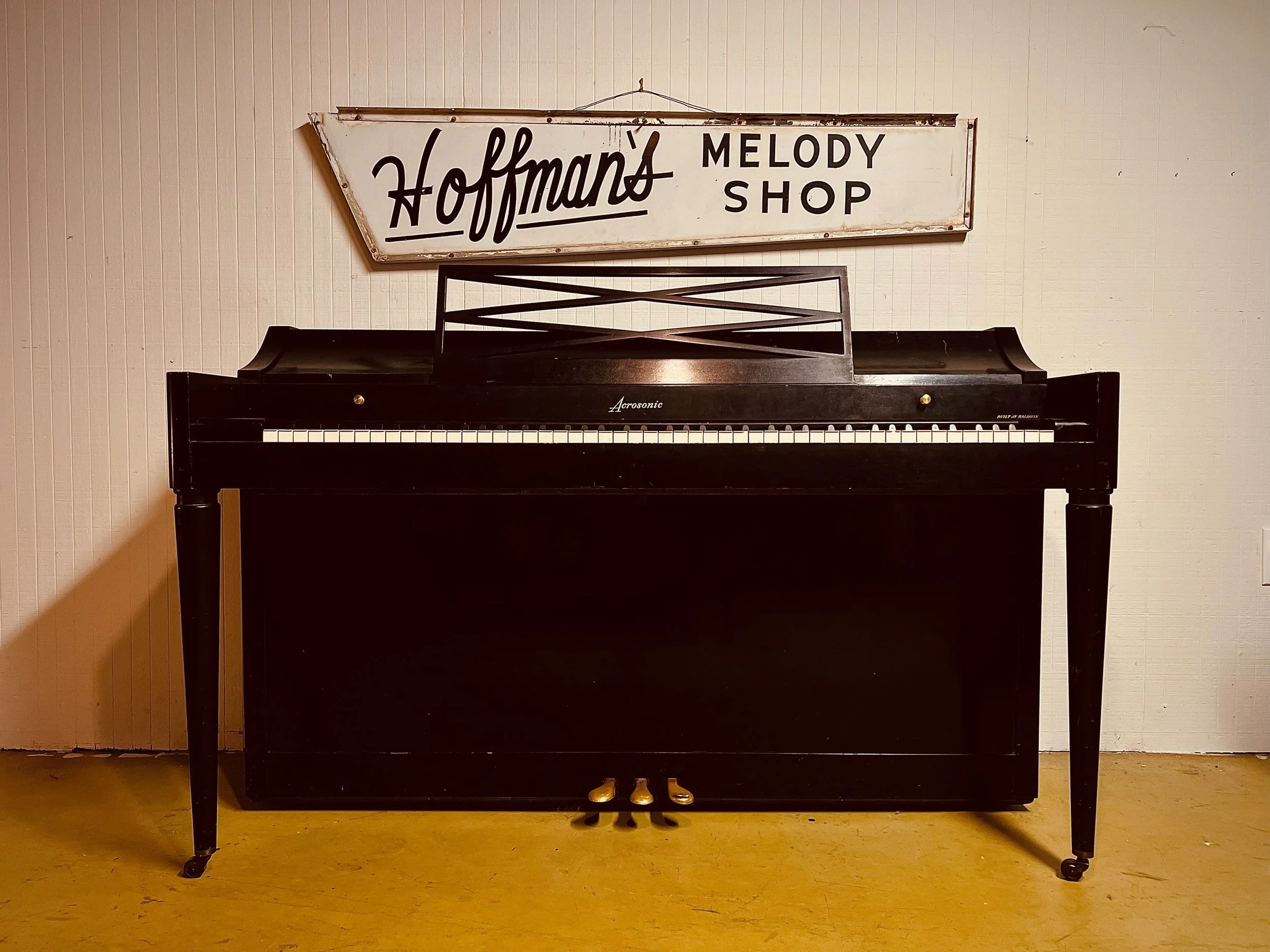
My dad's longtime friend, Ron Griggs, who had played Little League baseball with him as a kid, was now the city's Mayor Pro Tem. One morning, while attending a statue dedication at Founder’s Park, Ron noticed something hanging by a thread in a secluded back alley. From a distance, all he could make out was an “H.” As he walked closer, the object fell to the ground. To his surprise, it was an old metal Hoffman’s Melody Shop sign—one that nobody had seen since the store closed in 1972!
Ron secretly held on to the sign and surprised my dad with it several years later when they met for a visit in Vail.
Then, in 2010, my dad surprised me. He had secretly brought the sign into the practice space of my band, Strange Americans, and the story of Hoffman’s Melody Shop found its way into another generation.